
When Sharon Simeon helped create a glass vessel at the Flint Institute of Arts, the other SOLHOT 60+ artists gathered around to watch and support her. They cheered as the hot glass expanded, held their breath when the piece nearly fell and applauded when it was complete.
“The women were so supportive. When it was over, they applauded. There were tears,” Simeon said. “It was like they were my doulas, so I called them my ‘glass doulas’ because they saw the birth of this piece. It was amazing support and love.”
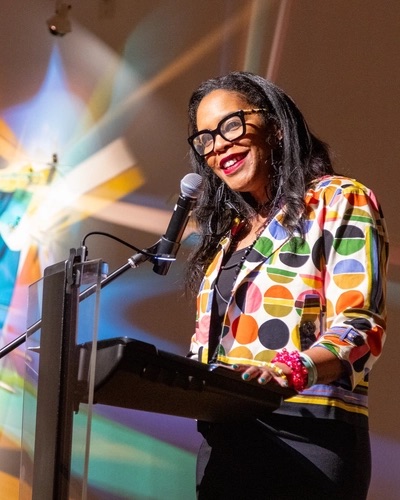
For Simeon, that moment reflected the larger sense of sisterhood she has experienced through the residency.
That encouragement is at the heart of SOLHOT 60+, a weeklong artist residency in its third year. Ruth Nicole Brown, a Michigan State University Foundation Distinguished Professor and the inaugural chair of the Department of African American and African Studies in the College of Arts and Letters, co-created the residency with Gwendolyn Taylor, a retired education policy and organization development analyst, and mental health practitioner. The MSU-Flint Institute of Arts partnership gives artists studio time, wellness programming, artist development and a sisterhood sustained through monthly gatherings.
SOLHOT 60+ is one expression of Saving Our Lives Hear Our Truths, Brown’s 20-year research and creative practice. Brown launched SOLHOT in 2006 after doctoral research found a contradiction in girl empowerment programs: Black girls were encouraged to lead and use their voices but could be penalized for demonstrating those qualities.
Brown built an approach centered on celebration, creativity and community. The work informed her scholarship and helped establish Black girlhood studies as a field. Over two decades, SOLHOT has taken multiple forms with communities and age groups, each shaped with participants rather than copied from a fixed model.
“There are a lot of artist residencies, and there are a lot of ways you can get an exhibition done,” Brown said. “But what makes it SOLHOT, what makes it radical and what makes it a movement, is that our work is process driven. To me, this is the heartbeat of what it means to call it a SOLHOT residency.”
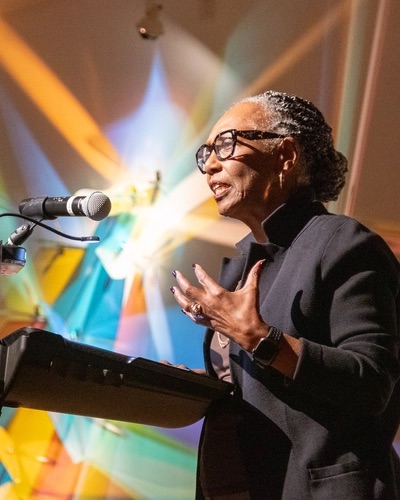
Taylor, an advocate for learning across the life span, had followed Brown’s research and requested a meeting about a Michigan iteration. She envisioned a residency for experienced artists whose talent, knowledge and creative development were not always fully supported by arts institutions.
Brown and Taylor approached the Flint Institute of Arts as host partner, suggesting one experimental residency to determine whether it met a need. The artists’ response was clear. The pilot has grown into a three-year collaboration examining meaningful access, healthy aging, creative practice and lifelong learning.
MSU’s role grows from Brown’s leadership and community-engaged scholarship in African American and African studies. Brown describes SOLHOT as a community movement that does not belong to the university, but as a partnership that allows MSU researchers to learn alongside artists and community organizations, bringing insights into scholarship, teaching and future questions.
“Reaching into an initiative like SOLHOT 60+ portends opportunities that we don’t even realize,” Taylor said. “Artmaking and cultural understanding cross every academic area, every social area, every economic area . . . I think there’s a lot of opportunity and a lot to learn.”
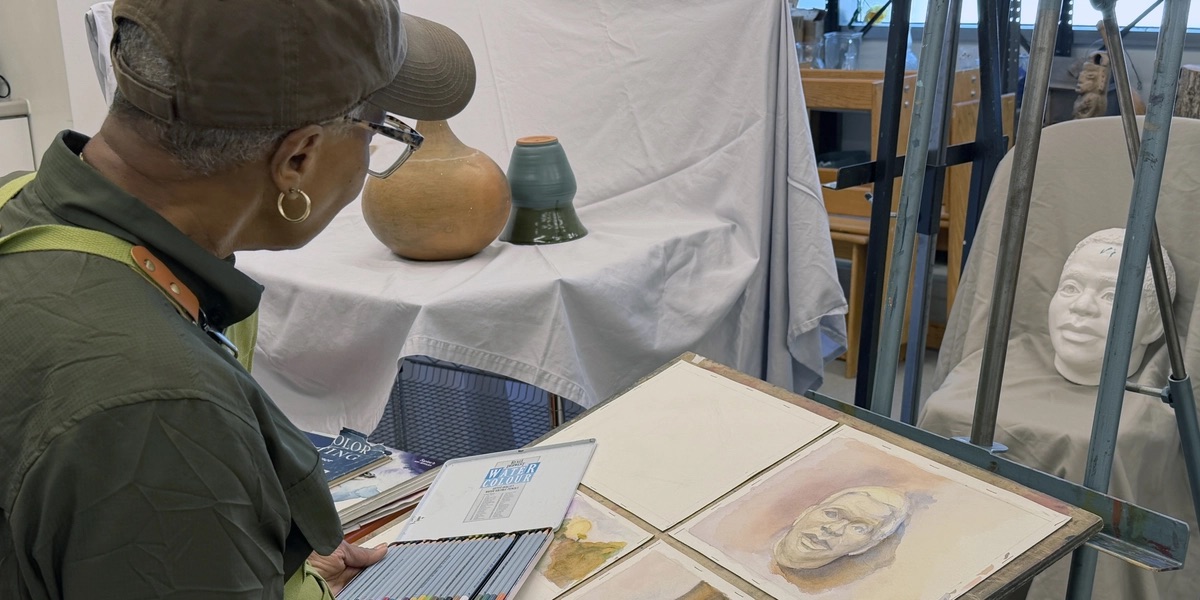
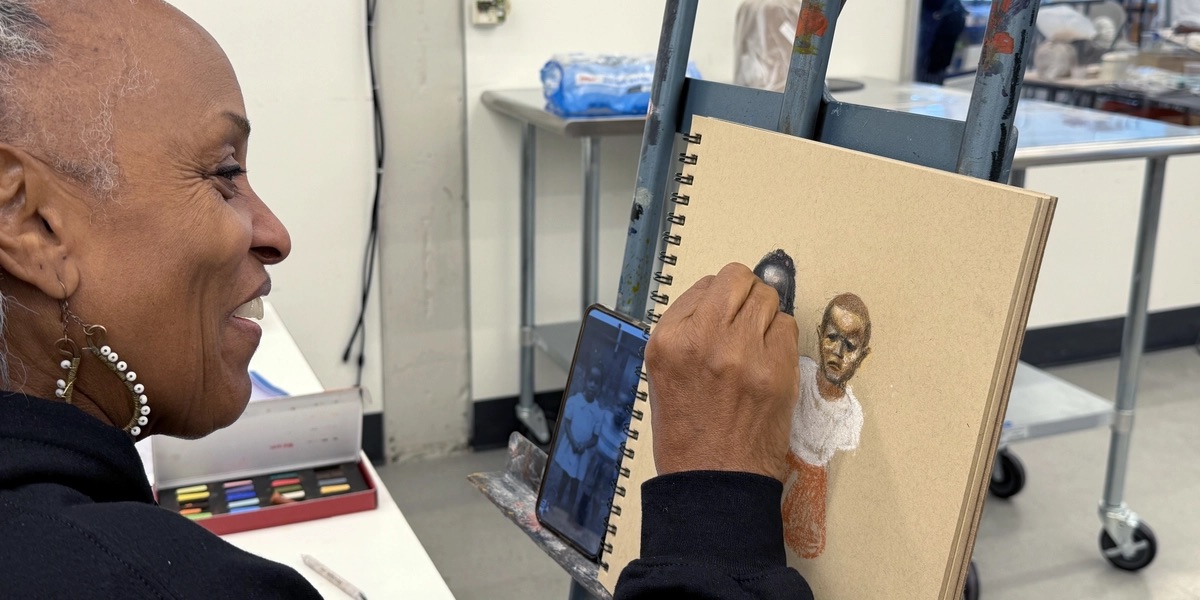
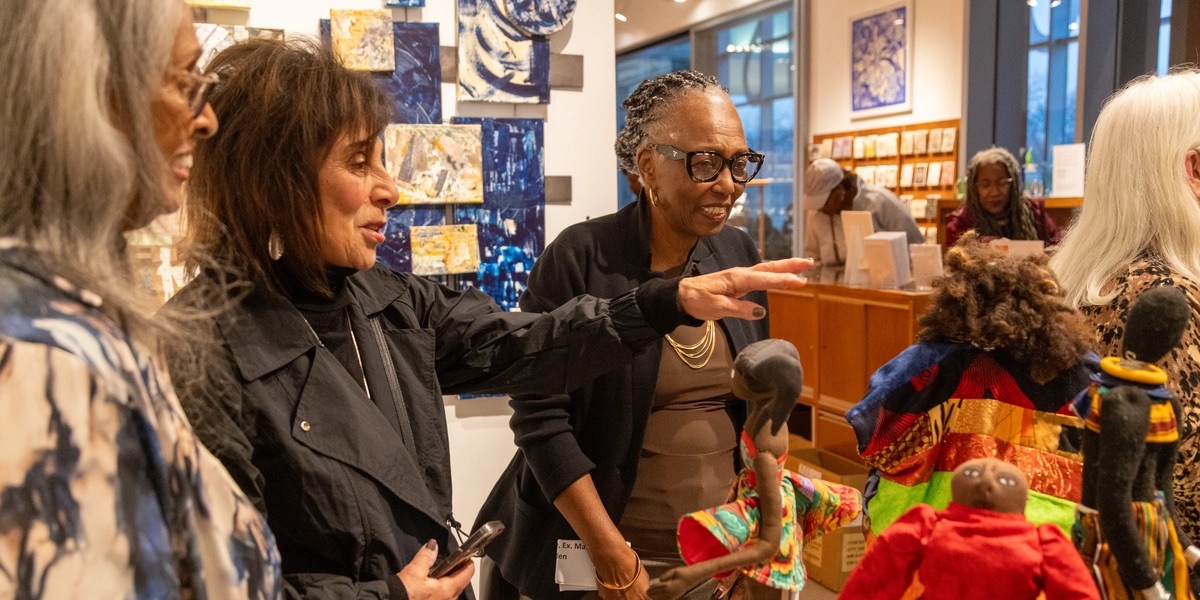
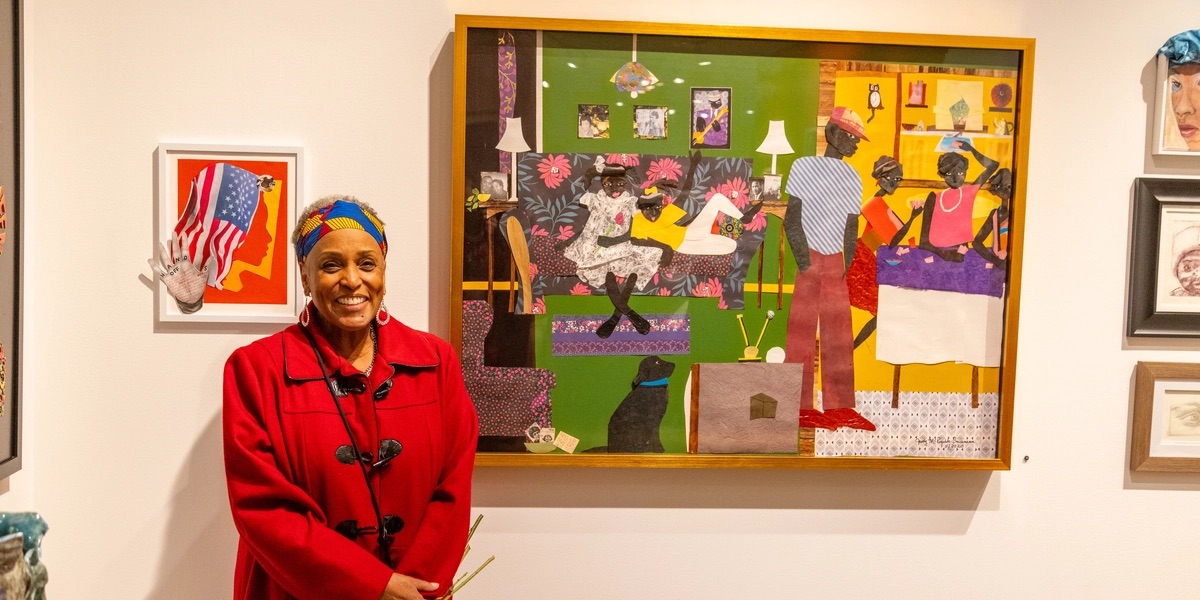
Each day begins at 6:30 a.m. with movement led by participant and exercise instructor Rhonda Willingham, followed by breakfast and a meeting with poetry or reflection. Studio sessions are balanced with nutritious meals, artist talks, gallery visits, professional development, wellness practices and evening sound baths. The schedule supports the whole artist while protecting time to create.
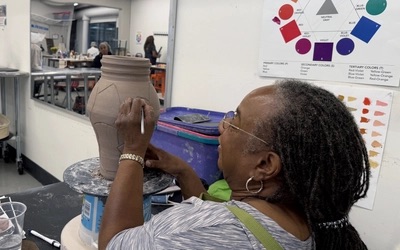
Brown said the rituals are intentional. Movement, artmaking and shared meals build trust and help participants practice what SOLHOT calls “being homegirls to each other.” It is not an identity, Brown said, but an ethic of meeting people where they are and valuing what each person brings.
The effects are visible in the artists’ work and lives. Potter Valerie Horton joined after stepping away from clay for 18 months to accept a community responsibility. The invitation arrived when she needed to return to her own creative practice.
“SOLHOT is a wonderful experience, and the focus is health and wellness,” Horton said. “It came at a time in my life when I really needed to come back to me. This journey has helped me get back to what I want to do. Now, I am giving more to myself and purposely moving through my life.”
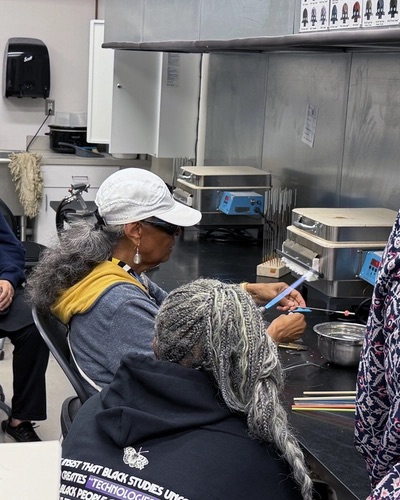
MSU alumna and multimedia artist Marcia Watkins earned a master’s degree in ceramics at MSU, where a teaching assistantship allowed her to teach drawing and ceramics. She credits faculty support with strengthening her artistic foundation. SOLHOT 60+ reopened her path to fine art after years as an artist and educator.
“Especially in years two and three, we became a community, and we went beyond just our art practice,” Watkins said. “We began sharing from the heart about how each person was thinking and feeling and what her goals were. In this group, we can talk about a wide range of topics as they relate to art, life and self. There is love and friendship that have grown within the group.”
For participants, that shared work supports more than their artistic development. Simeon said the creative process helps her mentally and physically engage.
“As far as wellness goes, it helps me stay cognitively active,” Simeon said. “When I have an idea, I have to problem-solve and think about what approach I am going to use. It keeps my mind active, and it is also physically challenging because I am on my feet and doing things.”
For Brown, benefits like these are not separate from the research or the art. They are the method. SOLHOT 60+ demonstrates what can happen when a university, an arts institution and community members invest in creativity and care as shared work. Its lessons about access, belonging, healthy aging and lifelong learning can inform how institutions support people and their creative possibilities at every stage of life.
By: Ebony Stith, originally published by MSUToday.

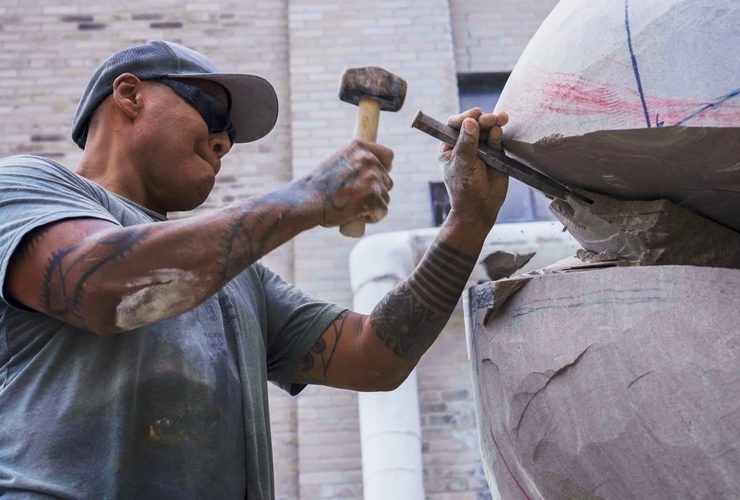 New sculpture unveiled at Multicultural Center honors student advocacy, cultural unity
 MSU Professor Brings America’s First Composer to Life in October Musical Performance
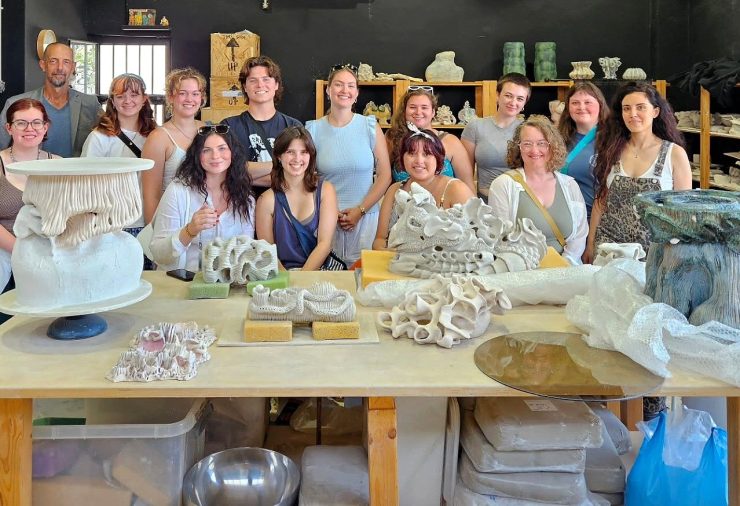 Education Abroad in Greece Inspires Students’ ‘Lasting Impressions’ Exhibition