

A microgallery created and built by Michigan State University students in the Introduction to Sculpture (STA 352) class taught this semester by Department of Art, Art History, and Design Assistant Professors Barbara Pearsall and Rafael Villares is opening to the public on Dec. 10 in the alleyway beside (SCENE) Metrospace in downtown East Lansing.
The installation, known as the Honeycomb Gallery, is the first of three microgalleries designed by MSU students that will open through the Spring 2026 Semester. The other two microgalleries are planned for the MSU Union and a yet-to-be-determined East Lansing neighborhood. The three microgalleries will showcase student-made public art.
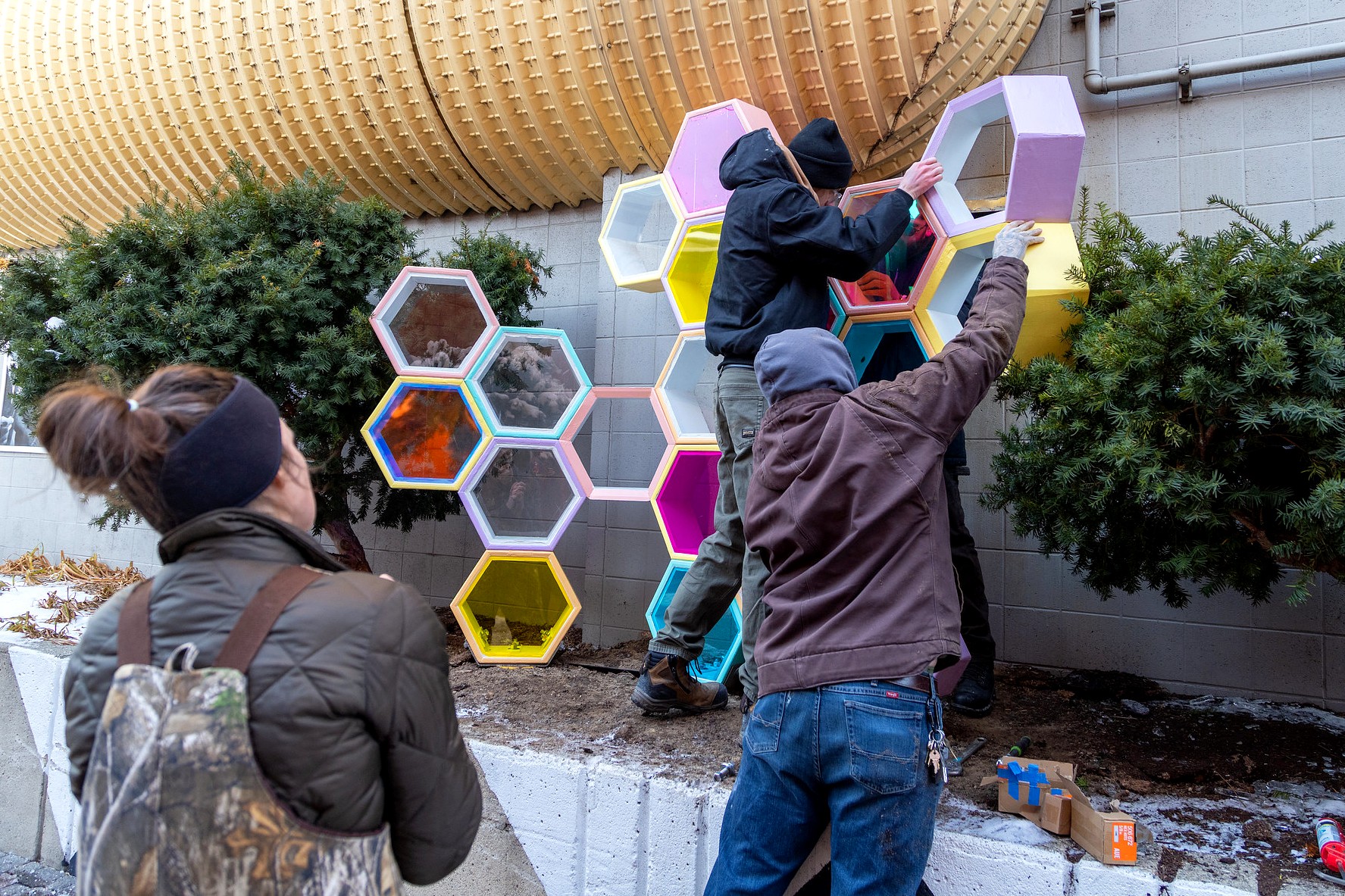
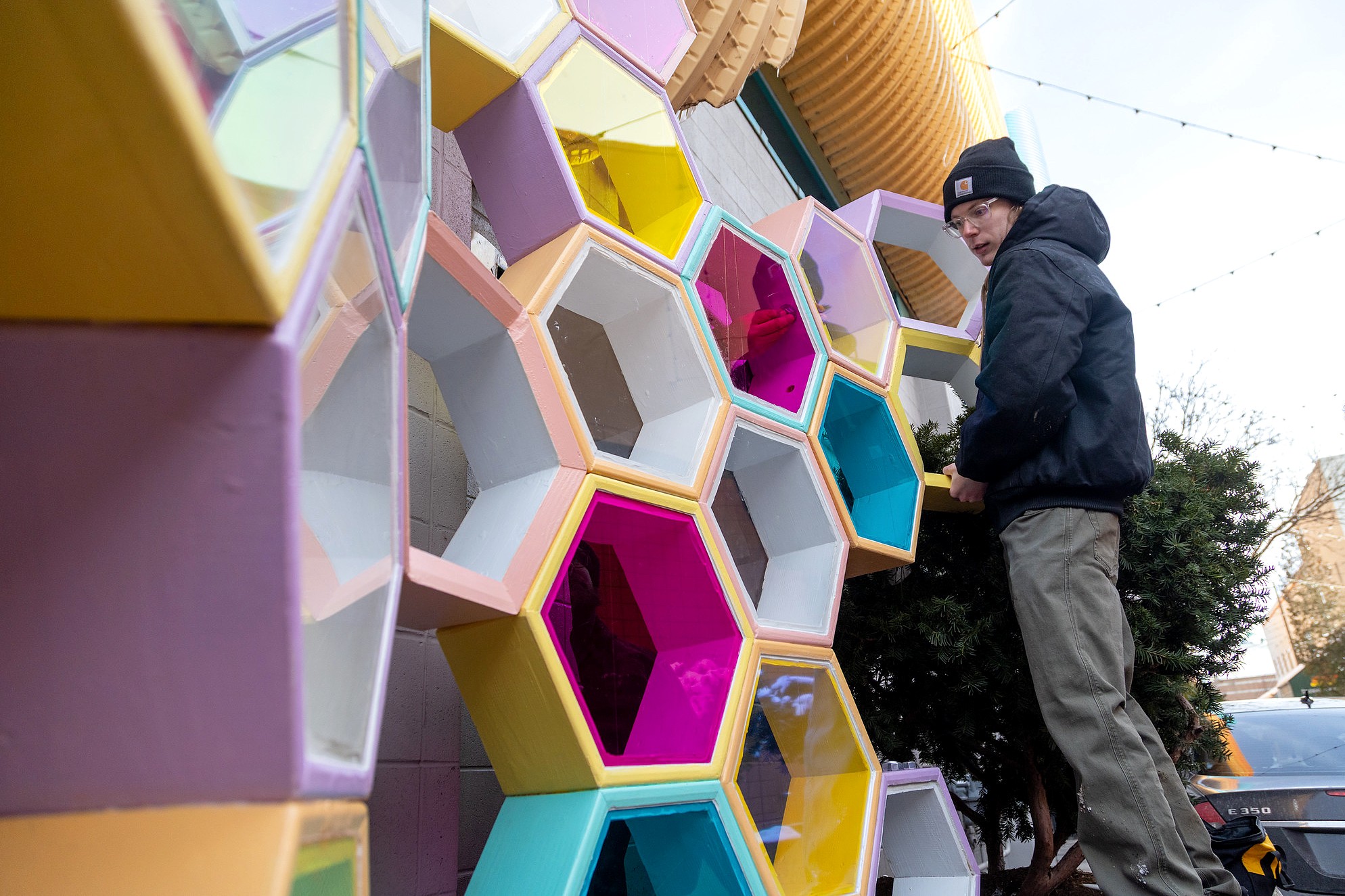
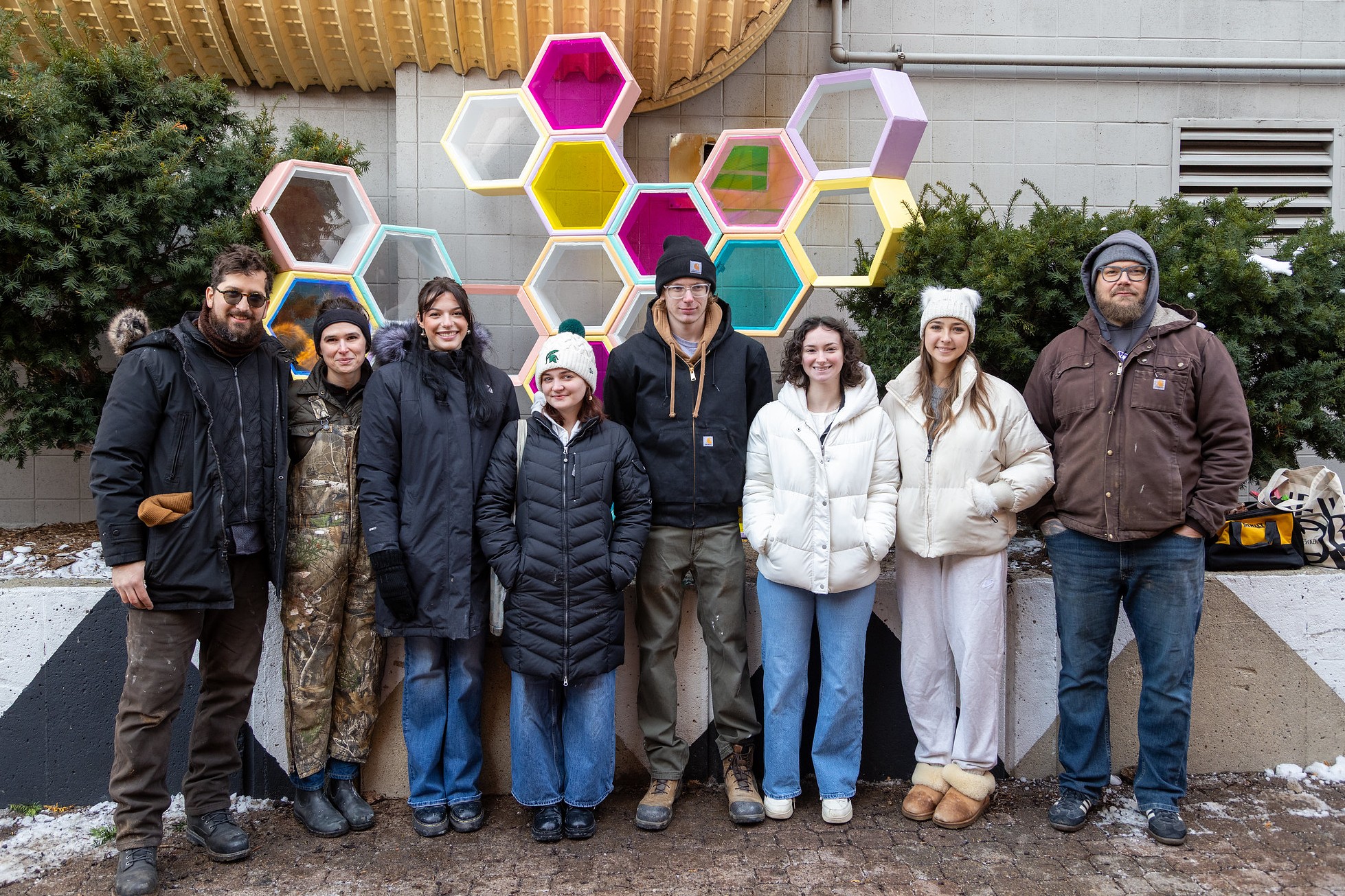
An opening reception for the Honeycomb Gallery is planned for Wednesday, Dec. 10, from 12:45 to 2:45 p.m. in the alleyway by (SCENE) Metrospace, which is located at 110 Charles Street in East Lansing. Hot chocolate and refreshments will be served.
“We’re thrilled to launch the first of three student-designed microgalleries,” Pearsall and Villares said. “This project is a dynamic partnership between Michigan State University and the City of East Lansing, creating new opportunities for art to become part of everyday public spaces. By empowering students to build and curate these galleries, we’re not only making contemporary art more accessible, but also championing the vital role students play in facilitating creative exchange between campus and community.”
The initiative began when Laurén Gerig, Director of Exhibitions and Outreach in the College of Arts & Letters, invited Pearsall and Villares to collaborate on a microgallery with their newly launched Introduction to Sculpture course. The professors saw it as a natural fit for a class grounded in hands-on experimentation, teamwork, and public engagement.
“Collaboration is not only at the heart of this project, but it’s also a core value in how we approach teaching,” Pearsall and Villares said. “Incorporating the microgallery into the curriculum allowed us to involve students directly in the creative and logistical process of developing public art. It gives them hands-on experience in designing, fabricating, and installing artwork in the community, while also fostering teamwork and encouraging innovative thinking about how art can function outside traditional gallery settings.”
The Honeycomb Microgallery was the final project for the Introduction to Sculpture class, construction for which followed several workshops held during the first half of the semester so students could develop the skills necessary to build the microgallery. Students worked in dedicated teams — wood shop, plexiglass, assembly, and design — while also contributing to all aspects of construction. Materials were chosen for durability. Students selected thick wooden panels for the frame and house paint sealed for weather resistance, and plexiglass.

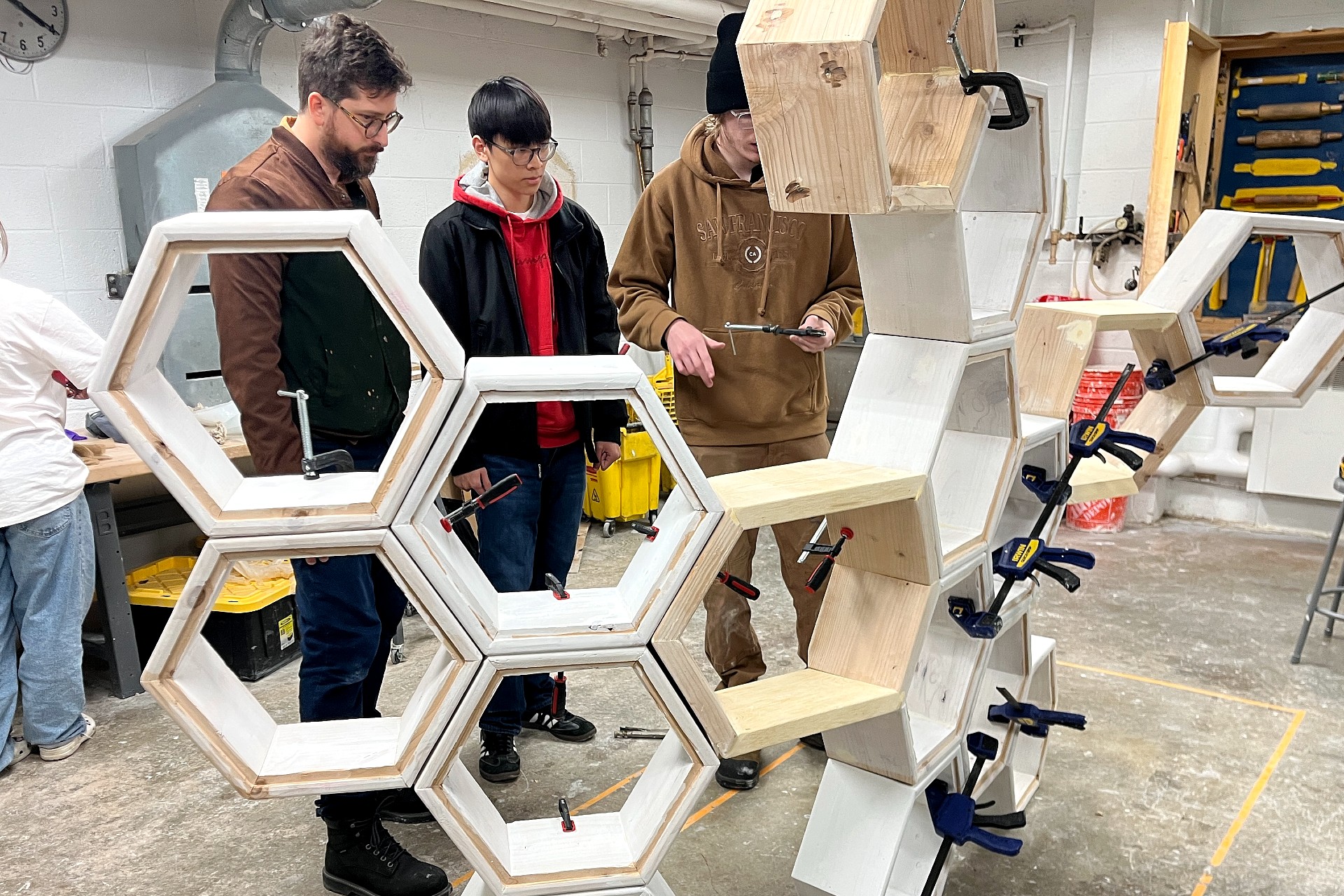
Riley Klapp, a sophomore Apparel and Textile Design major and member of the design team, said the season itself influenced the group’s creative direction.
“This grey time of year inspired me to design something that would bring light and color to East Lansing year-round,” Klapp said. “After revising and planning with my classmates, I think we’ve built something that will display local art to the community, while being a piece of community art itself.”
Paige Salayko, an Art Education major and member of the design team, hopes the structure becomes one of East Lansing’s hidden gems.
“Having an art piece I can show my family and friends is something I am proud of, and I am honored to be part of East Lansing’s community,” she said. “I hope that when visitors see the gallery they feel inspired by our work and the pieces that will be displayed inside of it.”
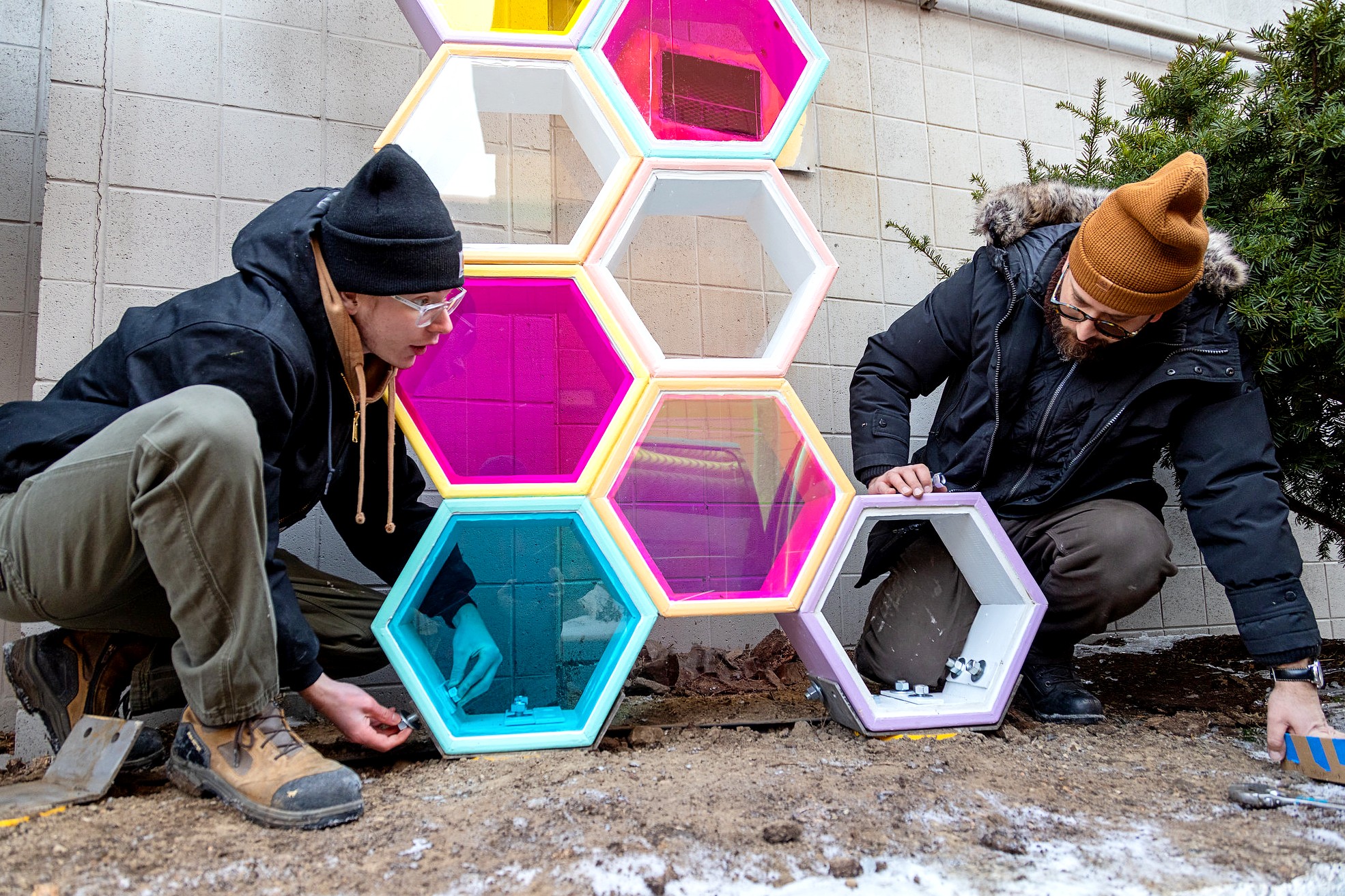
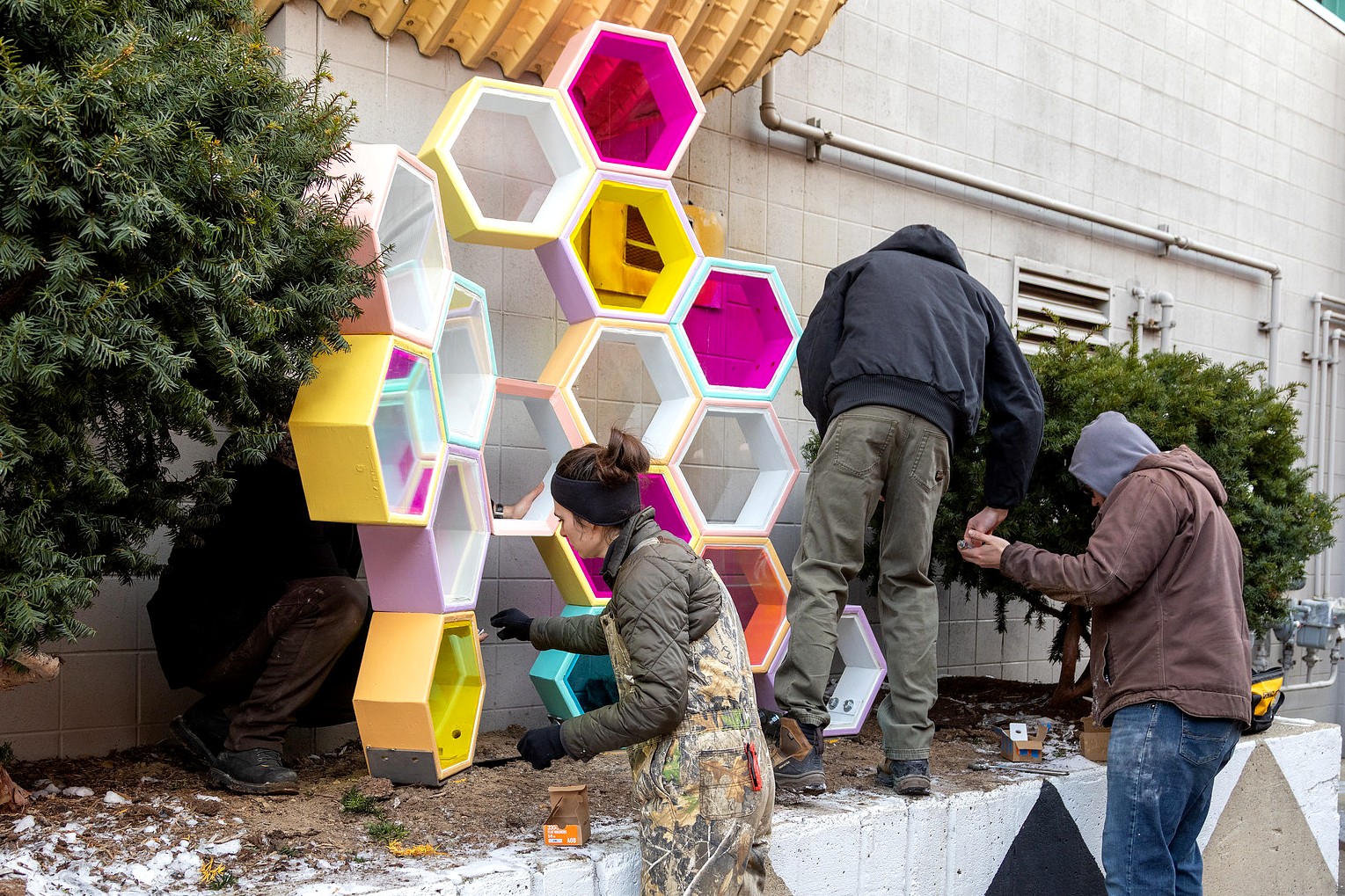
Pearsall and Villares hope that the project offered students a direct introduction to public artmaking and collaborative sculptural practice, stating that “Ultimately, our goal was for students to leave the experience with practical skills, a greater sense of creative confidence, and a deeper appreciation for the impact their work can have on their community. We hope this project broadens students’ understanding of sculptural practice by showing them that sculpture isn’t limited to objects in a traditional gallery — it can be interactive, site-specific, and deeply connected to the people and places around it. By working on the microgallery, students can see firsthand how their creative decisions influence the experience of art in public and community settings.”
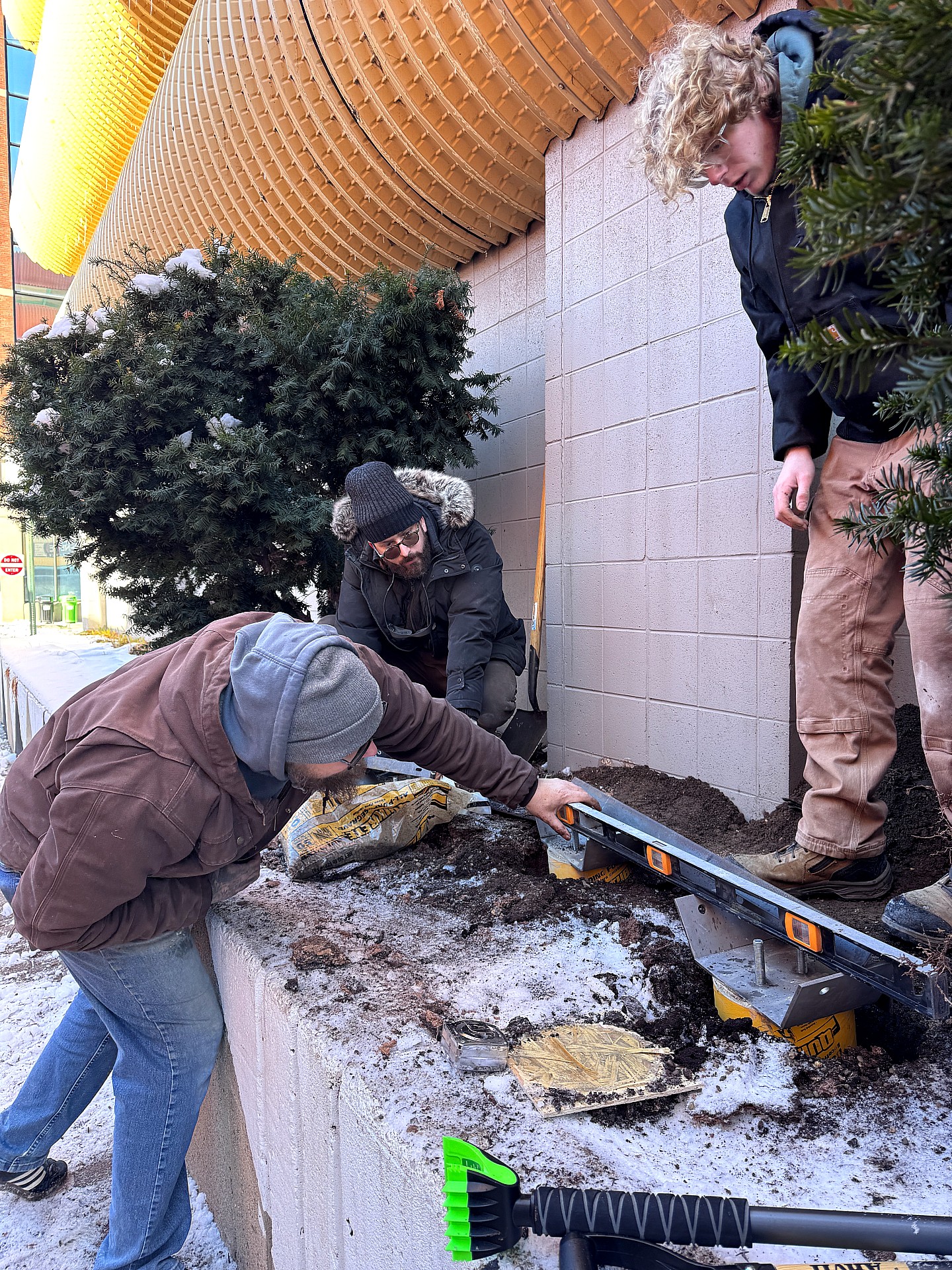
The microgallery project is the first of three-part investment in public arts infrastructure in East Lansing. The first three microgalleries are supported by $1,000 in funding from the City of East Lansing, with additional grants currently in development.
“This project would not have been possible without the dedicated logistical and administrative support of Laurén Gerig, Director of Exhibitions and Outreach at MSU, and Wendy Sylvester-Rowan, Arts Programming and Creative Placemaking Specialist for the City of East Lansing,” Pearsall and Villares said. “We are also deeply grateful for Katie Deska, Education & Upcycle Coordinator, MSU Surplus Store and Recycling Center, and the Cultural Arts Grant provided by the East Lansing Arts Commission, which made it possible to construct the microgallery. Their collective efforts and commitment to public art have been integral in bringing this collaborative project to life.”
Pearsall and Villares say they hope visitors to the microgallery leave inspired by how art can transform everyday spaces, stating that “This inaugural microgallery invites people to pause, look closer, and experience creativity outside a traditional gallery — right in the heart of their community. We want visitors to feel a sense of connection, not only to the artwork but also to the students who helped bring it into being. By seeing art facilitated by emerging artists in collaboration with campus and city partners, we hope the community recognizes the value of creative exchange between Michigan State University and East Lansing.”
 Faculty voice: Art is what we need right now
 Meet Phillip Bahar, new director of MSU’s Broad Art Museum
 Finn Smith: “Planting Wishes” at Beal Botanical Garden