
Niloufar Fallahfar’s paintings are not confined to the canvas. As her artistic practice evolved, her work quite literally expanded into space through the inclusion of three-dimensional objects that become part of the narrative itself.
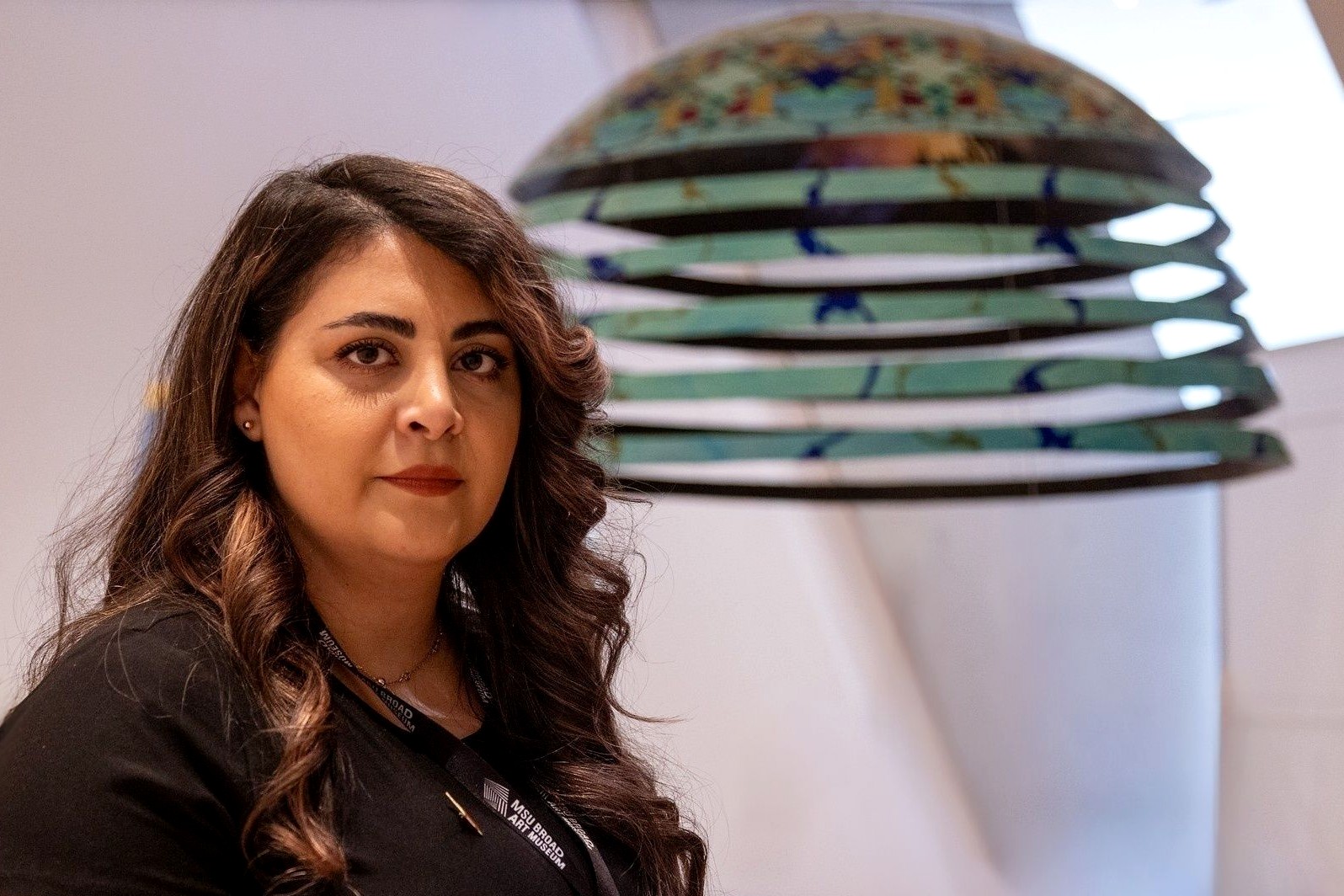
“I started by putting canvas on top of each other to offer a different perspective and make the audience curious about the different angles of the painting,” she explained.
A native of Iran, Fallahfar draws inspiration from Persian miniatures, particularly the work of 16th-century artist Kamal ud-Din Behzad who used complex architectural structures through multiple simultaneous viewpoints in Persian miniature painting.
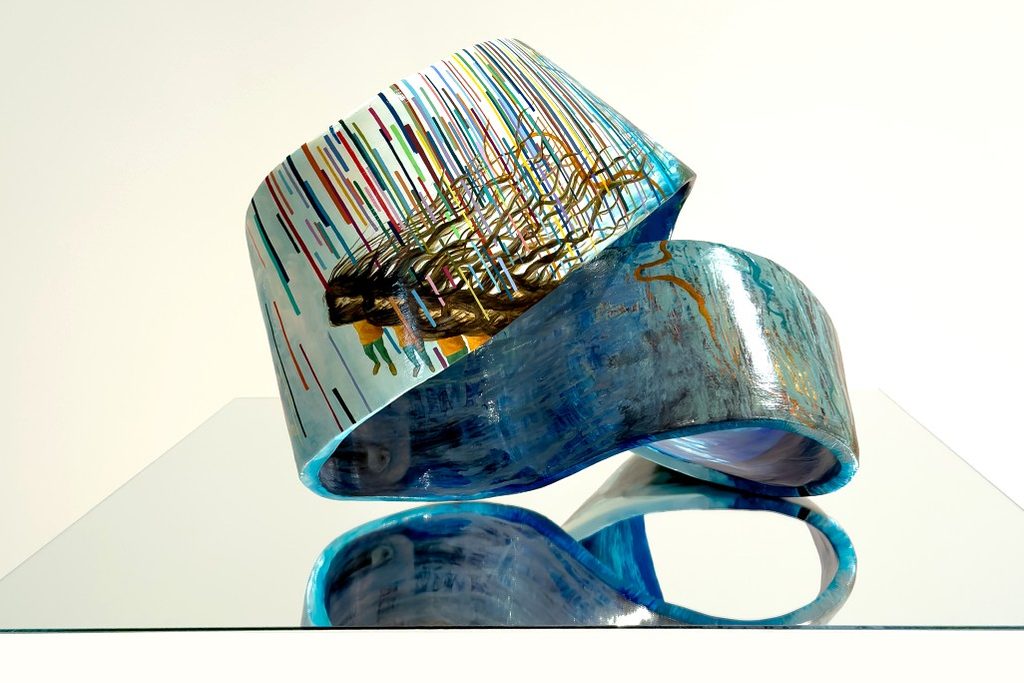
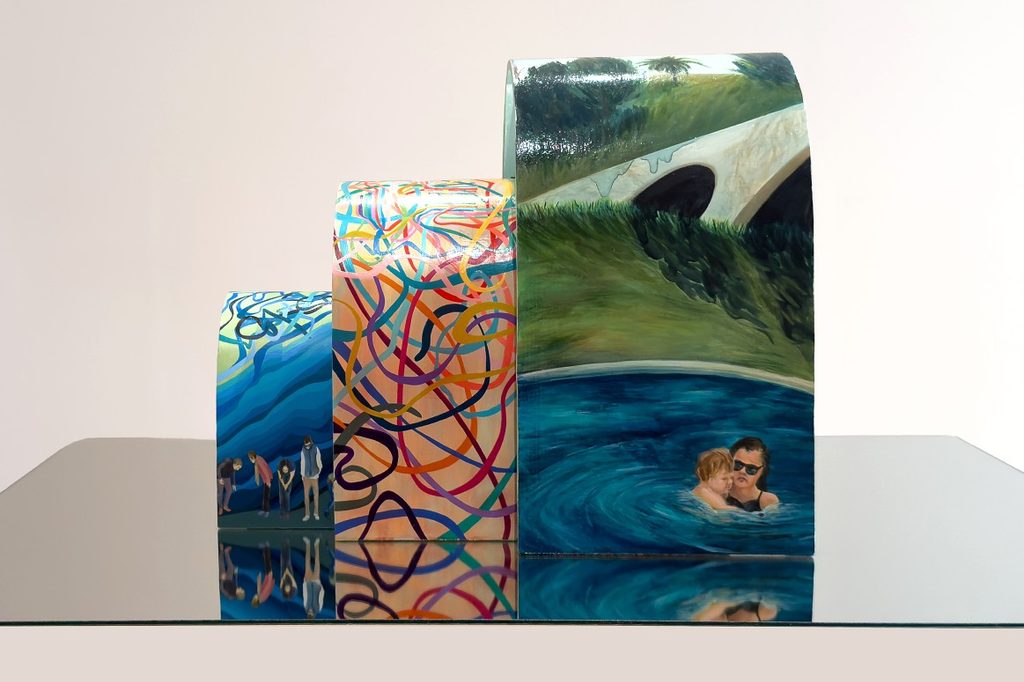
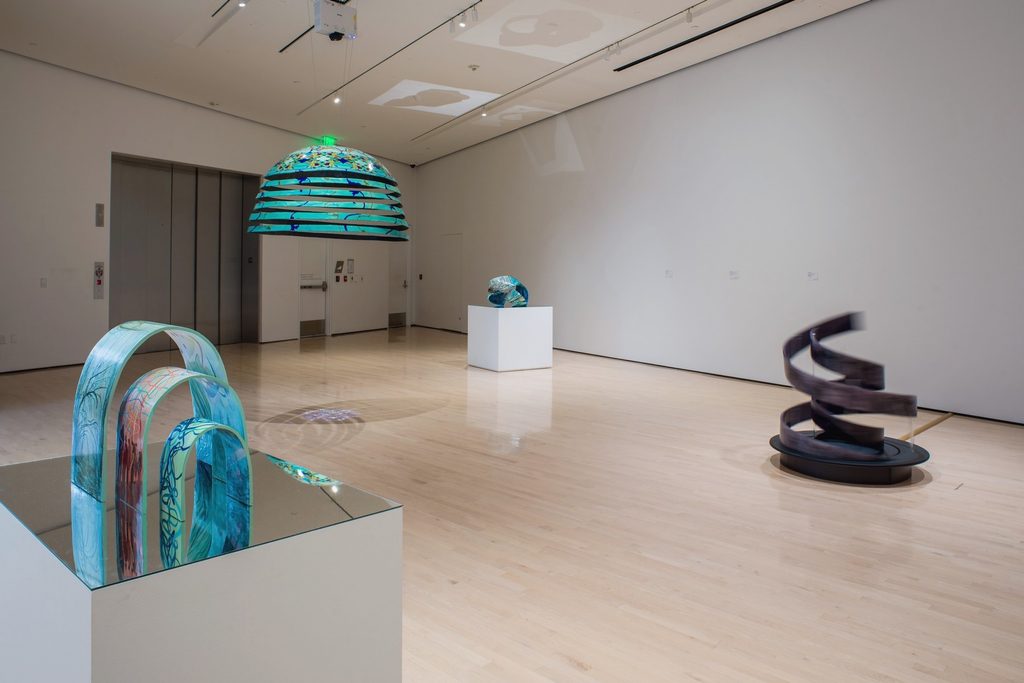
“I was thinking, how can I extend this perspectival complexity into physical space through painting,” she said, “and how can I put the audience instead of the figures that he put in his miniatures and merge the body with the view.”
Fallahfar is one of five MFA candidates in MSU’s Department of Art, Art History, and Design graduating in Spring 2026 whose work is featured in the 2026 MFA Exhibition at the Eli and Edythe Broad Art Museum through May 17, 2026.
Fallahfar’s work in the MFA Exhibition incorporates historic Persian architectural elements, offering viewers a new way to look at paintings and a better grasp of the historical significance of these shapes associated with Persia.
Fallahfar hopes her work sparks curiosity about Persian art and history, subjects she believes are often overlooked in Western education.
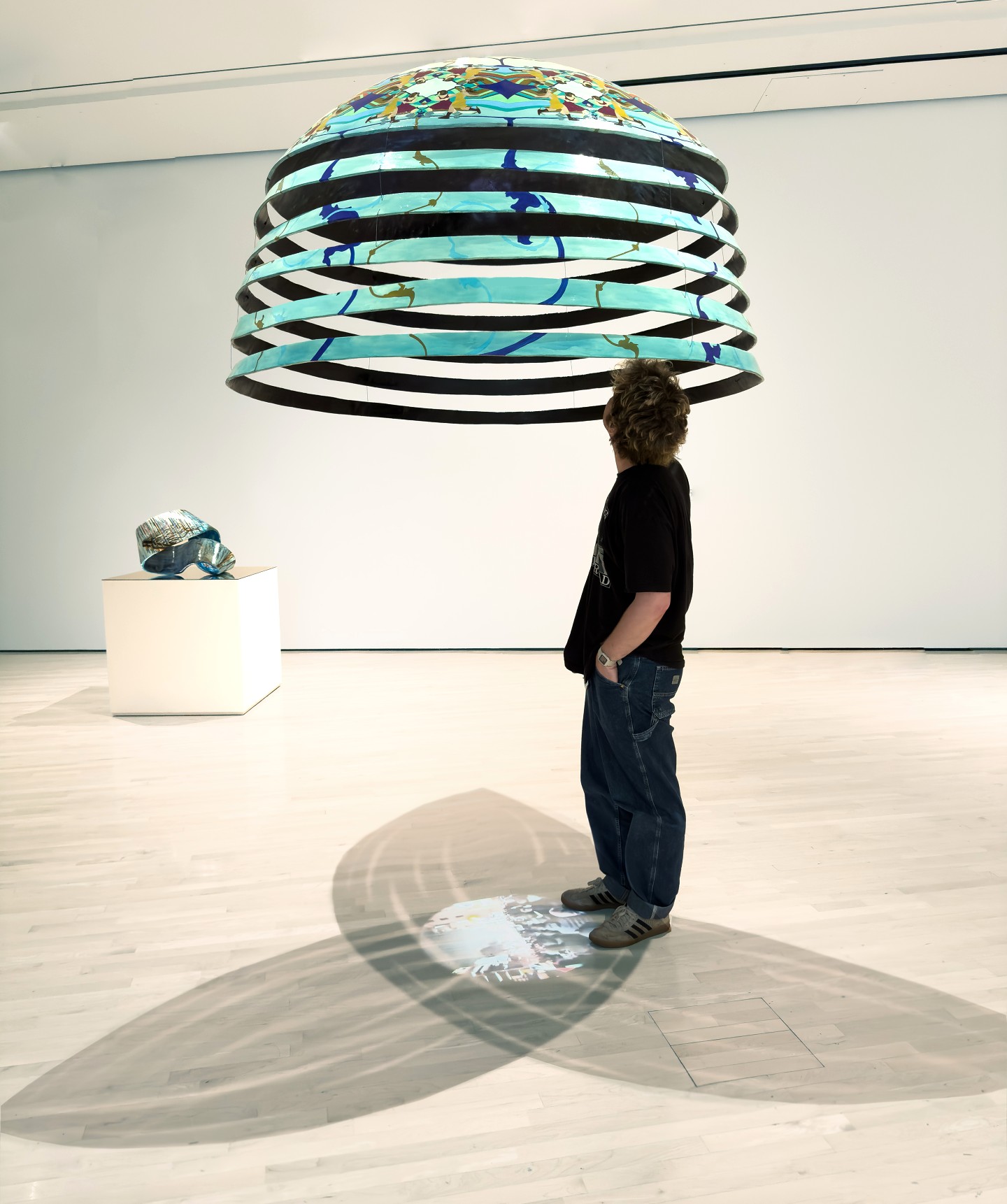
“We study Western art history, and I think there is a lack of knowledge in Western culture about Persian art history,” she said. “For example, in Iran, the dome is often associated with Islamic architecture, but its architectural roots go back much earlier, including pre-Islamic fire temples and palaces from the Sassanid era.”
After moving to the United States, Fallahfar found herself repeatedly explaining the cultural and historical context behind her work.
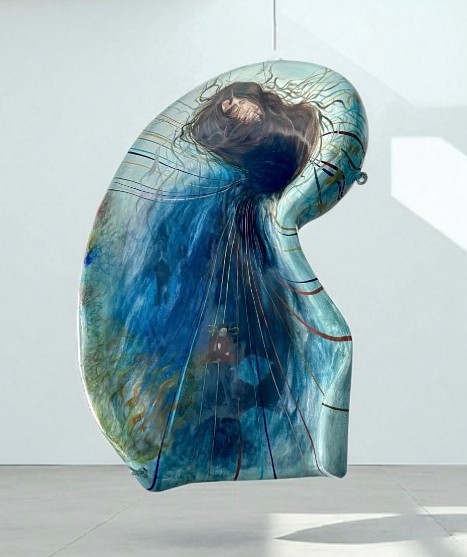
“When I came here, whenever I wanted to explain myself or my work, I needed to tell a story about the whole history of my country,” she said. “Because of that, I try to see myself as a Persian visual artist, and as an Iranian artist, I want to create work that fills gaps in history, reveals what is rarely told, and makes hidden or unseen narratives visible.”
In 2025, Fallahfar participated in ArtPrize, the international competition held in Grand Rapids, Michigan. Her piece, “A Soft Collapse of a Narrative,” displayed at DeVos Place Convention Center received the Asian Art Award.
Her work also has been exhibited nationally, from Miami University in Oxford, Ohio, to a gallery in Seattle, Washington. But Fallahfar says she still has much more to learn. Now that she has completed her MFA, she plans to continue her education by studying architecture.
“I feel like my practice is going to be more complex architectural elements, and I need to learn how to manage all these structures to create them,” she said. “I feel like something is missing right now, so I need to learn more and will join another program in sculpture to continue educating myself.”
The 2026 MFA Exhibition is the culmination of a three-year program offered by MSU’s Department of Art, Art History, and Design in which the artist-scholars push the existing limits of art while exploring their creative practice with the support of a faculty committee selected by each MFA candidate.
Under the guidance of their faculty committees, MFA candidates develop a rigorous studio practice and engage in extensive study in a medium or area of concentration. Their work is informed by their curiosity of the world around them and complemented by coursework in the history of art and related fields.
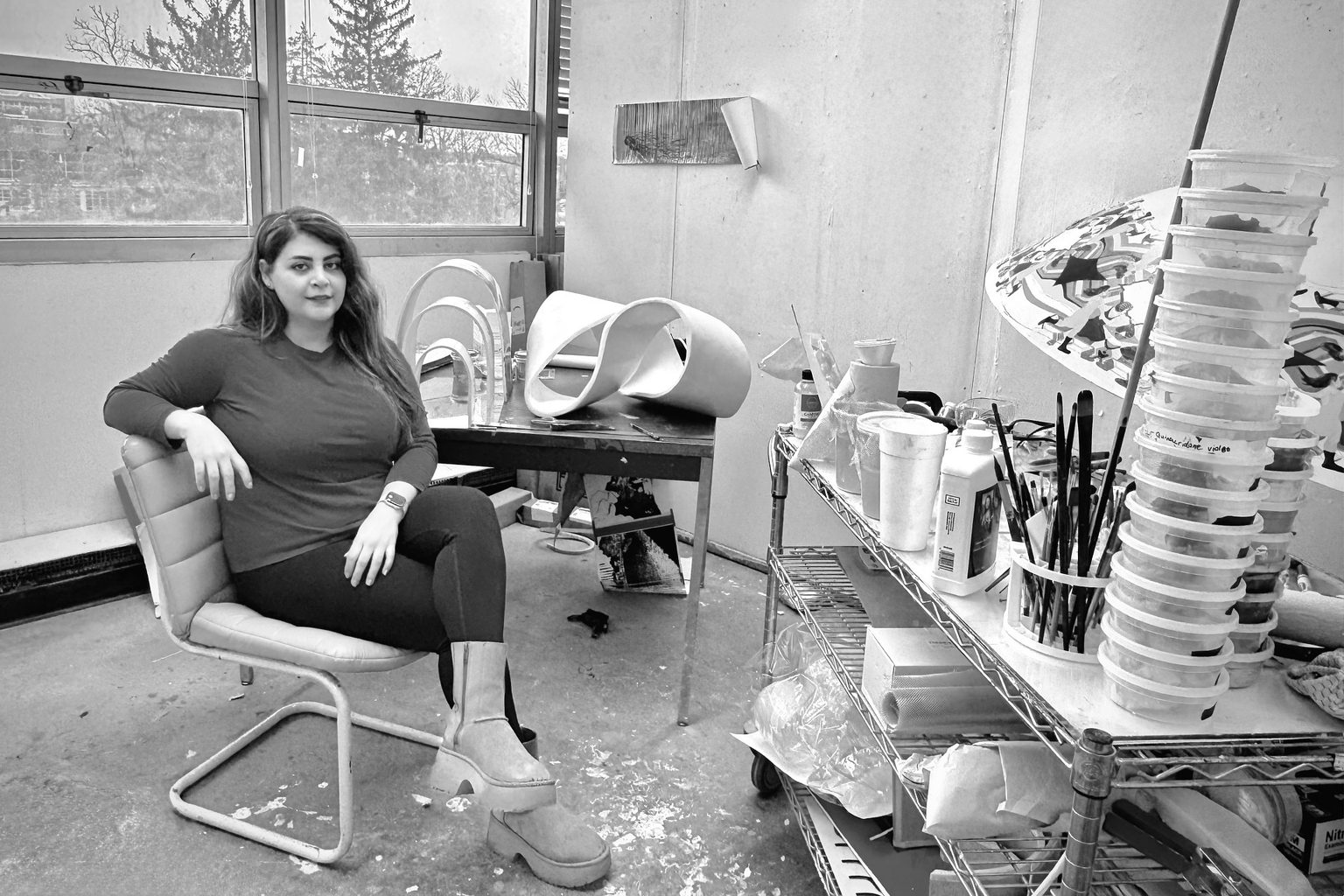
While developing their thesis exhibitions, MFA candidates work with their committees to refine their research and artistic goals, deepening their understanding of what it means to be a contemporary practicing artist. The MFA Exhibition serves as evidence of their achievements and continuing artistic and scholarly promise.
The MFA Exhibition is organized by the Eli and Edythe Broad Art Museum in partnership with MSU’s Department of Art, Art History, and Design and curated by Rachel Winter, Ph.D., Assistant Curator, with support from Nat Swartz, Curatorial Research Assistant. Support for this exhibition is provided by the Graduate School at MSU and the John and Susan Berding Family Endowment.
The Eli and Edythe Broad Art Museum is open Wednesday-Sunday from 10 a.m. to 6 p.m. Admission is always free.
By Colleen Gehoski Steinman, originally published by College of Arts and Letters.

 More than a residency: SOLHOT 60+ creates space for art and sisterhood
 Stories in Stone: Sculptor Jason Quigno Brings Indigenous Art to MSU’s Multicultural Center
 MSU Sculpture Students Learn Metal Casting, Build Creative Networks in Michigan