
Dr. Shannon Schmoll is the director of the Abrams Planetarium where she develops and delivers astronomy education programming for all ages. She is always looking for new ways of utilizing the immersive planetarium theater with her team and collaborative partners both on and off campus. She holds a joint Ph.D. in astronomy and science education from the University of Michigan, where she researched integrating field trips into formal curriculum. More recently, she was the research lead on the Big Astronomy Project that created a planetarium show, activities and online content around astronomy in Chile. On that project she studied how people engaged in content after planetarium visits and during virtual shows. She is currently serving as president of the International Planetarium Society.
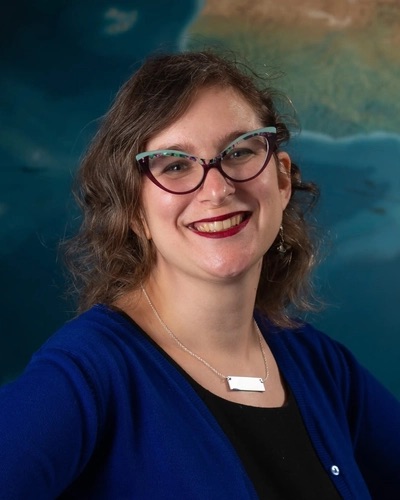
I often hear from folks that I have the coolest job and it’s true. I get to traipse among the stars and our planetarium system is a powerful and flexible immersive tool that allows us explore the universe. Being in the middle of campus affords us opportunities to work with people across disciplines and really get to play.
We have worked with faculty, staff or students from nearly every college at MSU. We have discussed the science of sci-fi, observed environmental effects of space junks, seen 360 photos of archaeological sites, sat under incantation bowls from ancient Iran and Iran, and flown through proteins with biochemists. We’ve helped students with major projects from thesis concerts to photoshoots for space-inspired fashion designs, to name a few.
More often than not, these collaborations end up related to astronomy. The fact that we can tie astronomy to so many different topics speaks to its power. We all see the same sky connecting us to one another in space.
The stars and planets that we see today are the same ones that our ancestors saw thousands of years ago, connecting people through time. Humans have used patterns of motion as our first clocks and calendars, shared important knowledge through lore and built tools to better observe the skies. Throughout history, the sky has also inspired creative expression as people sought to capture the beauty of the universe. Astronomy encompasses so many aspects of what makes humans human — curiosity, creativity, innovation and connection.
Today, however, that connection to the sky is under threat, in large part due to light pollution. Under truly dark skies, up to 6,000 stars are visible with the naked eye. With the rise of artificial lighting, many of the fainter stars are lost and most people cannot regularly see the Milky Way. Most people now live with some level of light pollution and our connection to history and the sense of wonder that the universe can inspire is being lost.
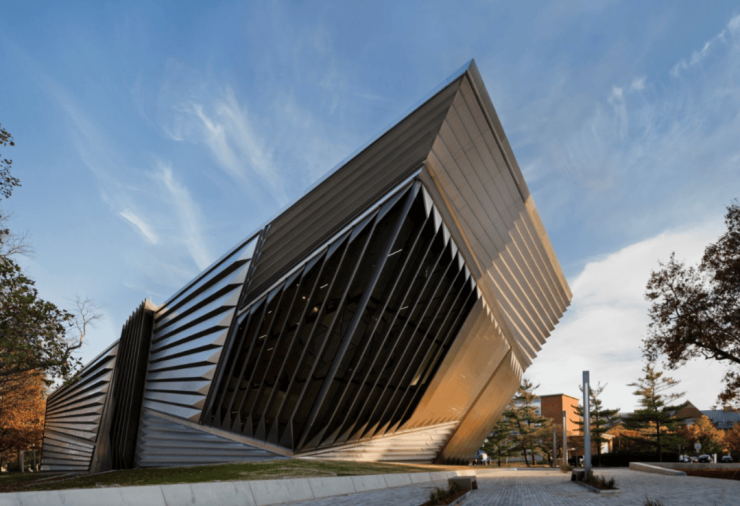
“Learning from Noctalgia” is a collaboration that uses all aspects of what makes the planetarium such a unique, interdisciplinary tool to bring awareness to this issue. To accompany his exhibition “Darkness” at the Eli and Edythe Broad Art Museum, Chicago-based artist Jan Tichy created a planetarium show in partnership with researchers across campus. Jan uses the immersive nature of the planetarium to take us to different places on campus. He shifts our perspective to make the viewer feel as if they are low in the grass with fireflies or hanging out in a forest of vegetables. We can then see how artificial light engulfs us in ways that are not otherwise obvious. He highlights the voices of partners on campus, discussing the effects and impacts of light pollution on human health, insect diversity, planet growth and our connection to our history, each other and nature.
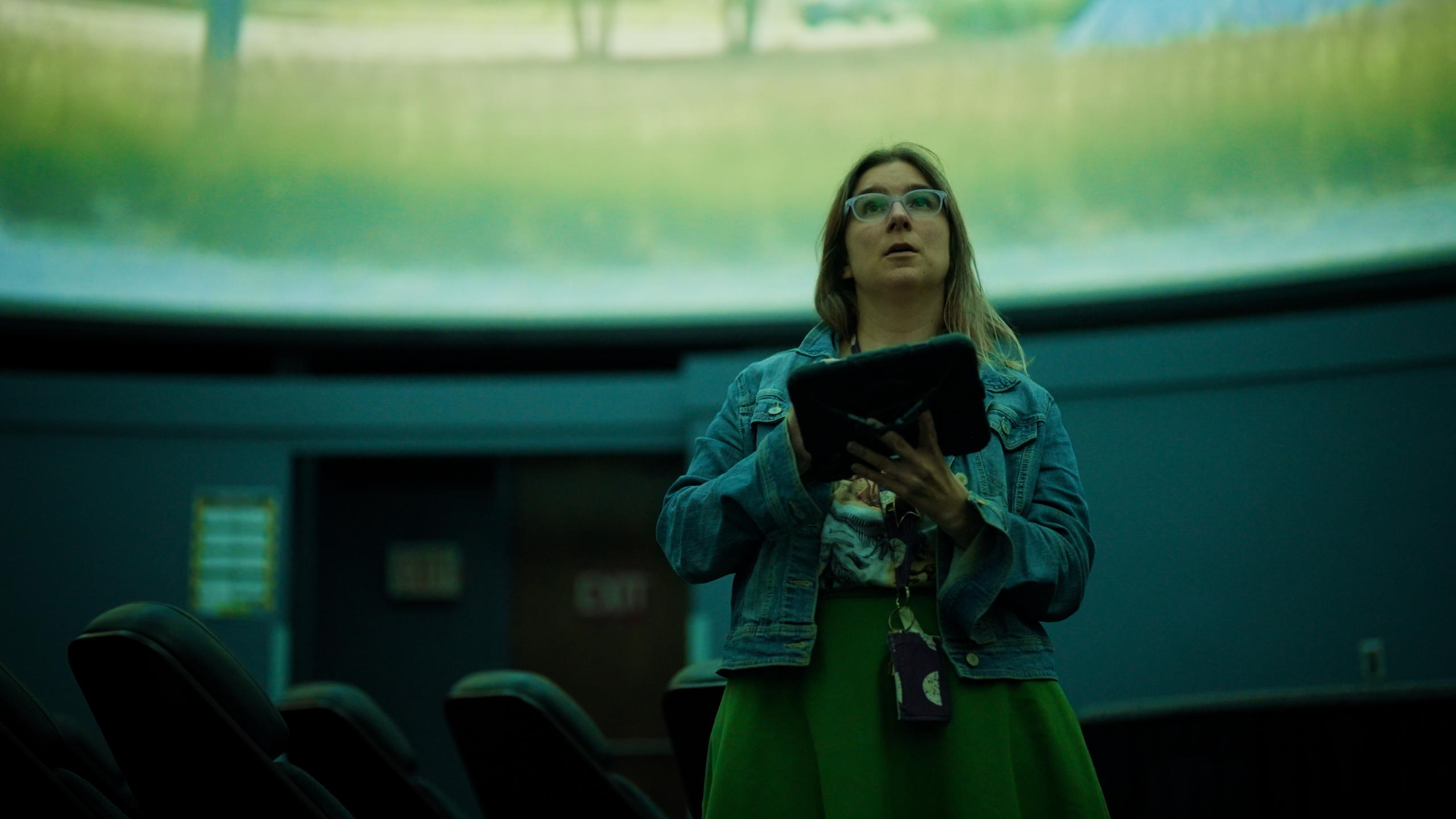
This project has already spawned new collaborations. For instance, the show features Amanda Lorenz who manages the MSU Bug House. Jan brought collaborators out for a meeting and Amanda and I started talking about joint events. We then worked together on a “Bugs in Space” theme for our monthly Spartan Young Astronomers Club. We both learned so much about insect experiments aboard the International Space Station and, most importantly, had fun.
It was because of Jan’s vision that we were able to get more campus partners into the planetarium to see what it could offer. Through the arts, I found new connections between astronomy and other areas of research at MSU.
My work involves explaining the vast and intangible universe, and that can make you feel alone in the cosmos. But by examining how light pollution is an issue that impacts all of us, we can recognize that we are not alone in finding solutions. You are never alone when you collaborate. I am grateful for people like Jan who have the vision and goal to bring people together and shine light on the things that connect us. After all, we do all live under the same sky.
By: Shannon Schmoll, originally published by MSUToday.

 MSU Sculpture Students Learn Metal Casting, Build Creative Networks in Michigan
 From Exhibition Challenge to Commercial Opportunity: MSU Innovation Advances a Smarter, More Sustainable Wall System
 Ask the Expert: How Arts and Humanities Drive Michigan’s Economic Future